Documenting Impact Through S-kala
Every effort that is made with genuine purpose creates a story. Not always a loud story. Not always one that makes headlines or fills auditoriums. Sometimes it is a quiet story — the story of a woman who walked into a training centre uncertain of herself and walked out a few weeks later holding something she made with her own hands, feeling, perhaps for the first time in years, genuinely proud of what she was capable of.
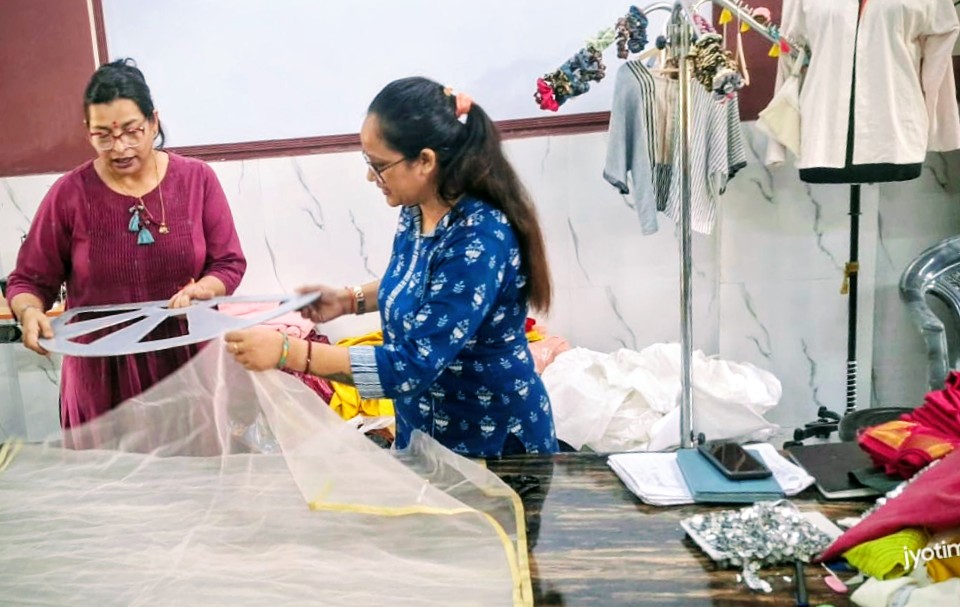
At S-kala – Shakuntala Shishu Lok, these stories are happening. Every week, in training sessions and workshops, in the quiet concentration of women learning new skills, in the careful finishing of handmade products, in the small but significant moments when a learner realises she can do something she did not believe she could — change is taking place.
The question is not whether the work matters. It clearly does. The question is whether that work is being seen. Whether it is being recorded, preserved, and presented in a way that allows others to understand its depth and its value.
That is what impact documentation is truly about.
Why Invisible Work Stays Invisible
There is a painful irony that many social institutions experience. The work is real. The change is genuine. The effort is consistent and sincere. But because it is not documented properly, it remains largely invisible — to potential supporters, to CSR partners, to the wider community, and sometimes even to the institution itself.
Training sessions happen and are not recorded. Products are made and not photographed. Learners grow in confidence and their journeys are not captured. Events are held and their outcomes are not written down. And slowly, without anyone intending it, years of meaningful work fail to accumulate into the kind of evidence that allows an institution to say, clearly and credibly, this is what we have done, and this is the difference it has made.
S-kala understands this risk, and it takes seriously the responsibility of not letting its work disappear into the silence of undocumented effort. Because the women whose lives are being touched by this institution deserve to have their journeys recorded. They deserve to have their growth acknowledged. And the institution itself deserves to be seen for what it genuinely is — a purposeful, committed, and increasingly professional platform for women empowerment.
What Documentation Actually Captures
When people hear the word documentation, they often picture spreadsheets and formal reports — dry, numerical, impersonal. And yes, numbers matter. They tell an important part of the story. How many women have been trained. How many certificates have been issued. How many products have been created. How many training sessions have been completed.
But numbers alone are never the whole story. Numbers show scale. They do not show meaning.
The whole story requires something more human. It requires the photograph of a woman concentrating deeply over an embroidery frame, her hands steady with a focus she did not know she possessed when she first arrived. It requires the written account of a learner who came in barely able to hold a needle and left having made a finished garment she was proud enough to show her family. It requires the honest record of a workshop — not just how many attended, but what was taught, what was created, what questions were asked, and what shifted in the room as the session progressed.
It requires, in other words, the human story behind the data. Because behind every number in every impact report, there is a person. A real woman with a real journey and a real future that is slowly, steadily becoming more possible because of the training and support she received.
Good documentation captures both — the scale and the humanity. The data and the dignity.
The Journey From Training to Evidence
At S-kala, the impact journey begins the moment a woman joins a training programme. From that point, every step of her learning becomes part of a larger story of institutional growth and community change.
She arrives — perhaps hesitant, perhaps curious, perhaps carrying a quiet hope she has not yet put into words. She begins to learn — slowly at first, then with growing ease and confidence. She creates something — a stitched piece, an embroidered design, a handcrafted product that carries within it the hours of effort and attention she gave it. She completes her training and receives a certificate — not just a piece of paper, but a formal acknowledgement that she showed up, she worked, and she achieved something real.
Each of these moments, when documented carefully and thoughtfully, becomes a building block. One learner's journey adds to another's. One training session adds to the record of many. One product adds to a catalogue that shows what the women of S-kala are capable of producing. One certificate adds to a register that shows how many women have passed through this institution and carried something valuable away with them.
Together, these building blocks construct something that no single moment could achieve alone — a clear, credible, compelling picture of an institution that is doing exactly what it says it is doing, and doing it with consistency and care.
The Trust That Documentation Builds
Trust is not given to institutions. It is earned. And one of the most reliable ways an institution earns trust is by being transparent — by showing its work honestly, by maintaining records that can be examined, by presenting its progress in a way that invites scrutiny rather than avoiding it.
For S-kala, this kind of transparency is not just a strategic necessity. It is a reflection of the values at the heart of the institution. An institution that genuinely cares about the women it serves, and genuinely believes in the work it is doing, should have nothing to hide and everything to share.
CSR partners and social investors look for exactly this. They are not simply looking for institutions that claim to do good work. They are looking for institutions that can demonstrate it — through organised reports, through honest data, through photographs that show real activities and real people, through success stories that put a human face on statistical outcomes, through documentation that says, clearly and without exaggeration, here is what we did, here is who benefited, and here is the evidence that it made a difference.
When S-kala presents its work in this way, it does not just attract support. It builds the kind of long-term, trust-based relationships that allow an institution to grow sustainably — relationships where partners feel confident that their investment is being used well and where communities feel assured that the institution is genuinely accountable to the people it serves.
Documentation as a Mirror for Growth
There is another dimension to impact documentation that is less often discussed but equally important — its value not to the outside world, but to the institution itself.
When records are maintained thoughtfully over time, they become a mirror. They allow S-kala to look clearly at its own work — to see what is going well, where improvement is needed, which training programmes are resonating with learners, which products have the most potential, which activities are generating genuine engagement and which may need to be rethought.
Without this mirror, growth is guesswork. With it, growth becomes intentional. Decisions can be made based on real evidence rather than impressions. Programmes can be refined based on actual outcomes rather than assumptions. Resources can be directed toward what genuinely works rather than what simply feels comfortable or familiar.
In this sense, documentation is not just about accountability to others. It is about an institution's commitment to its own continuous improvement — to being not just a good institution today, but a better one tomorrow.
The Human Heart of Every Record
It is easy, in the business of maintaining records and producing reports, to lose sight of what those records actually represent. A number in a register is a woman who gave her time, her effort, and her courage to this institution. A photograph in a gallery is a moment of genuine achievement that someone worked hard to reach. A success story in a report is a life that is genuinely different — in some quiet but real way — because S-kala existed and because the people within it cared.
The best impact documentation never forgets this. It keeps the human being at the centre of every record, every report, every data point. It ensures that in the process of making the institution's work visible, the people whose work it actually is are honoured — seen not as statistics, but as individuals whose journeys matter, whose efforts deserve acknowledgement, and whose growth is the entire reason any of this documentation exists in the first place.
At S-kala, impact documentation is not a bureaucratic exercise. It is an act of respect — for the learners, for the trainers, for the work itself, and for the community that this institution is committed to serving.
Making the Unseen Seen
S-kala is creating something real and something lasting. Skills are being built. Confidence is being grown. Products are being made. Lives are being touched in ways that ripple outward far beyond the walls of the training centre — into homes, families, and communities that benefit from having more confident, more capable, more self-reliant women at their heart.
The work is happening. Now it must be seen.
Through careful, honest, human-centred documentation — through photographs and reports, through learner profiles and product catalogues, through certificates and success stories, through data that is real and narratives that are true — S-kala can ensure that its impact is not only felt by those within the institution, but understood and valued by everyone beyond it.
Because in the end, documenting impact is not about proving that work has been done. It is about honouring the people who did it, preserving the stories of those who were changed by it, and building the kind of transparent, credible record that allows the work to continue growing — reaching more women, touching more lives, and creating more of those quiet, powerful moments when a woman holds up what she has made and realises, with genuine wonder and pride, exactly what she is capable of.
That story deserves to be told. And S-kala is committed to telling it — honestly, carefully, and with the full humanity it deserves.
Every effort that is made with genuine purpose creates a story. Not always a loud story. Not always one that makes headlines or fills auditoriums. Sometimes it is a quiet story — the story of a woman who walked into a training centre uncertain of herself and walked out a few weeks later holding something she made with her own hands, feeling, perhaps for the first time in years, genuinely proud of what she was capable of.
At S-kala – Shakuntala Shishu Lok, these stories are happening. Every week, in training sessions and workshops, in the quiet concentration of women learning new skills, in the careful finishing of handmade products, in the small but significant moments when a learner realises she can do something she did not believe she could — change is taking place.
The question is not whether the work matters. It clearly does. The question is whether that work is being seen. Whether it is being recorded, preserved, and presented in a way that allows others to understand its depth and its value.
That is what impact documentation is truly about.
Why Invisible Work Stays Invisible
There is a painful irony that many social institutions experience. The work is real. The change is genuine. The effort is consistent and sincere. But because it is not documented properly, it remains largely invisible — to potential supporters, to CSR partners, to the wider community, and sometimes even to the institution itself.
Training sessions happen and are not recorded. Products are made and not photographed. Learners grow in confidence and their journeys are not captured. Events are held and their outcomes are not written down. And slowly, without anyone intending it, years of meaningful work fail to accumulate into the kind of evidence that allows an institution to say, clearly and credibly, this is what we have done, and this is the difference it has made.
S-kala understands this risk, and it takes seriously the responsibility of not letting its work disappear into the silence of undocumented effort. Because the women whose lives are being touched by this institution deserve to have their journeys recorded. They deserve to have their growth acknowledged. And the institution itself deserves to be seen for what it genuinely is — a purposeful, committed, and increasingly professional platform for women empowerment.
What Documentation Actually Captures
When people hear the word documentation, they often picture spreadsheets and formal reports — dry, numerical, impersonal. And yes, numbers matter. They tell an important part of the story. How many women have been trained. How many certificates have been issued. How many products have been created. How many training sessions have been completed.
But numbers alone are never the whole story. Numbers show scale. They do not show meaning.
The whole story requires something more human. It requires the photograph of a woman concentrating deeply over an embroidery frame, her hands steady with a focus she did not know she possessed when she first arrived. It requires the written account of a learner who came in barely able to hold a needle and left having made a finished garment she was proud enough to show her family. It requires the honest record of a workshop — not just how many attended, but what was taught, what was created, what questions were asked, and what shifted in the room as the session progressed.
It requires, in other words, the human story behind the data. Because behind every number in every impact report, there is a person. A real woman with a real journey and a real future that is slowly, steadily becoming more possible because of the training and support she received.
Good documentation captures both — the scale and the humanity. The data and the dignity.
The Journey From Training to Evidence
At S-kala, the impact journey begins the moment a woman joins a training programme. From that point, every step of her learning becomes part of a larger story of institutional growth and community change.
She arrives — perhaps hesitant, perhaps curious, perhaps carrying a quiet hope she has not yet put into words. She begins to learn — slowly at first, then with growing ease and confidence. She creates something — a stitched piece, an embroidered design, a handcrafted product that carries within it the hours of effort and attention she gave it. She completes her training and receives a certificate — not just a piece of paper, but a formal acknowledgement that she showed up, she worked, and she achieved something real.
Each of these moments, when documented carefully and thoughtfully, becomes a building block. One learner's journey adds to another's. One training session adds to the record of many. One product adds to a catalogue that shows what the women of S-kala are capable of producing. One certificate adds to a register that shows how many women have passed through this institution and carried something valuable away with them.
Together, these building blocks construct something that no single moment could achieve alone — a clear, credible, compelling picture of an institution that is doing exactly what it says it is doing, and doing it with consistency and care.
The Trust That Documentation Builds
Trust is not given to institutions. It is earned. And one of the most reliable ways an institution earns trust is by being transparent — by showing its work honestly, by maintaining records that can be examined, by presenting its progress in a way that invites scrutiny rather than avoiding it.
For S-kala, this kind of transparency is not just a strategic necessity. It is a reflection of the values at the heart of the institution. An institution that genuinely cares about the women it serves, and genuinely believes in the work it is doing, should have nothing to hide and everything to share.
CSR partners and social investors look for exactly this. They are not simply looking for institutions that claim to do good work. They are looking for institutions that can demonstrate it — through organised reports, through honest data, through photographs that show real activities and real people, through success stories that put a human face on statistical outcomes, through documentation that says, clearly and without exaggeration, here is what we did, here is who benefited, and here is the evidence that it made a difference.
When S-kala presents its work in this way, it does not just attract support. It builds the kind of long-term, trust-based relationships that allow an institution to grow sustainably — relationships where partners feel confident that their investment is being used well and where communities feel assured that the institution is genuinely accountable to the people it serves.
Documentation as a Mirror for Growth
There is another dimension to impact documentation that is less often discussed but equally important — its value not to the outside world, but to the institution itself.
When records are maintained thoughtfully over time, they become a mirror. They allow S-kala to look clearly at its own work — to see what is going well, where improvement is needed, which training programmes are resonating with learners, which products have the most potential, which activities are generating genuine engagement and which may need to be rethought.
Without this mirror, growth is guesswork. With it, growth becomes intentional. Decisions can be made based on real evidence rather than impressions. Programmes can be refined based on actual outcomes rather than assumptions. Resources can be directed toward what genuinely works rather than what simply feels comfortable or familiar.
In this sense, documentation is not just about accountability to others. It is about an institution's commitment to its own continuous improvement — to being not just a good institution today, but a better one tomorrow.
The Human Heart of Every Record
It is easy, in the business of maintaining records and producing reports, to lose sight of what those records actually represent. A number in a register is a woman who gave her time, her effort, and her courage to this institution. A photograph in a gallery is a moment of genuine achievement that someone worked hard to reach. A success story in a report is a life that is genuinely different — in some quiet but real way — because S-kala existed and because the people within it cared.
The best impact documentation never forgets this. It keeps the human being at the centre of every record, every report, every data point. It ensures that in the process of making the institution's work visible, the people whose work it actually is are honoured — seen not as statistics, but as individuals whose journeys matter, whose efforts deserve acknowledgement, and whose growth is the entire reason any of this documentation exists in the first place.
At S-kala, impact documentation is not a bureaucratic exercise. It is an act of respect — for the learners, for the trainers, for the work itself, and for the community that this institution is committed to serving.
Making the Unseen Seen
S-kala is creating something real and something lasting. Skills are being built. Confidence is being grown. Products are being made. Lives are being touched in ways that ripple outward far beyond the walls of the training centre — into homes, families, and communities that benefit from having more confident, more capable, more self-reliant women at their heart.
The work is happening. Now it must be seen.
Through careful, honest, human-centred documentation — through photographs and reports, through learner profiles and product catalogues, through certificates and success stories, through data that is real and narratives that are true — S-kala can ensure that its impact is not only felt by those within the institution, but understood and valued by everyone beyond it.
Because in the end, documenting impact is not about proving that work has been done. It is about honouring the people who did it, preserving the stories of those who were changed by it, and building the kind of transparent, credible record that allows the work to continue growing — reaching more women, touching more lives, and creating more of those quiet, powerful moments when a woman holds up what she has made and realises, with genuine wonder and pride, exactly what she is capable of.
That story deserves to be told. And S-kala is committed to telling it — honestly, carefully, and with the full humanity it deserves.