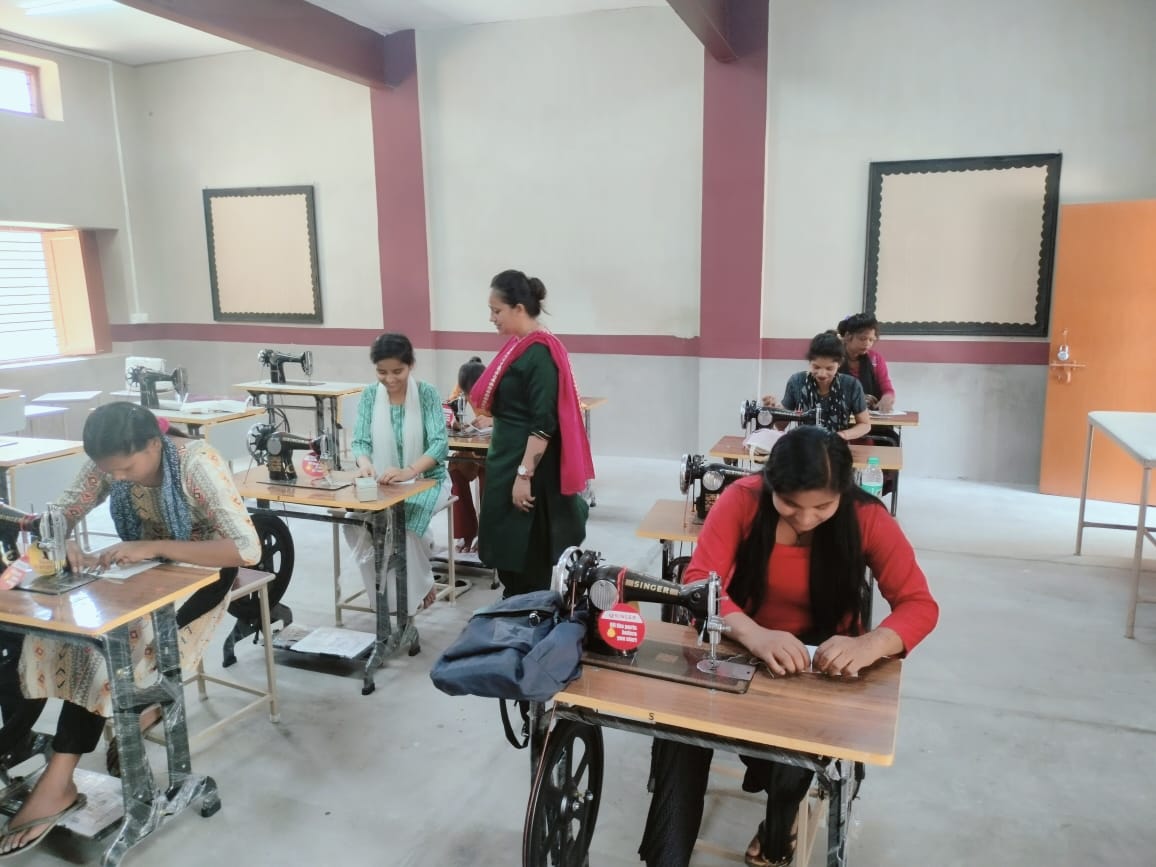
She almost didn't come back on the second day.
She had sat through the first session quietly — watching, not touching anything, letting the other women go first. When the trainer demonstrated the stitch, her hands stayed in her lap. She told herself she was just watching carefully. But the truth was simpler than that. She was afraid.
Afraid of trying something in front of others and getting it wrong. Afraid of being the slowest one in the room. Afraid, most honestly, that she would try her best and it still wouldn't be good enough.
We have seen this moment many times at S-kala. And we have learned something important from it.
The fear a woman brings through our door on her first day is not about fabric or thread. It is about something much older and much heavier than that. It is the weight of years spent being told — sometimes directly, sometimes quietly, sometimes just by the shape of daily life — that she is not the kind of person things happen for. That opportunity is for others. That learning is something she missed her chance at a long time ago.
That weight is what skill training must actually address. Not just the hands. The heart.
---
What Nobody Writes in the Programme Report
Every skill training programme has a curriculum. Ours covers tailoring, embroidery, craft, and practical product-making. There are sessions, there are practice materials, there are techniques to learn and standards to meet. That is all real and it all matters.
But there is another curriculum that never appears on paper. It runs quietly alongside the official one, and in many ways it is more important than anything written in any lesson plan.
It is the curriculum of self-belief.
A woman who has managed a household for fifteen years has demonstrated intelligence, endurance, creativity, and problem-solving ability that most formal workplaces would value highly. She has fed a family on a limited budget, navigated complicated relationships, made difficult decisions under pressure, and done it all without anyone calling it a skill or giving her credit for it.
She does not arrive at S-kala lacking ability. She arrives not knowing that she has it.
The job of skill training, done right, is to show her the evidence. Not tell her — show her. Because words are not enough. What she needs is the experience of actually doing something, completing it, and holding it in her hands and thinking: I made this. I did this. I can do this.
That moment — that specific, quiet, personal moment — changes something that no certificate can officially record but that everyone in the room can feel.
---
The First Thing She Makes
In the early days of training, mistakes are everywhere. Stitches go crooked. Measurements come out wrong. A design that looked achievable in the demonstration looks considerably harder when attempted for the first time.
And this is fine. This is learning. At S-kala, we treat early mistakes not as failures but as information — as the raw material of progress.
Our trainers have one consistent practice: they never make a learner feel like a burden for asking a question twice. Or three times. Or five times. Because the woman who asks a question five times is the woman who genuinely wants to understand. And that desire to understand is exactly what we are here to support.
Slowly, the stitches straighten. The measurements become more consistent. The fingers begin to remember what the mind has been learning. And then, usually in the third or fourth week, something changes.
She finishes something.
Not a practice attempt. Not a rough draft. Something complete — a pouch, a cloth bag, an embroidered piece — something she started at one end and finished at the other, without stopping, without giving up, entirely by herself.
She looks at it for a moment.
Then she looks up.
And what we see in her face in that moment is not surprise that she managed it. It is something that goes much deeper than that. It is the beginning of a new understanding of herself.
---
How Confidence Travels
Here is something we have noticed, again and again, at S-kala.
When a woman grows in confidence inside the training room, she does not leave that confidence behind when she goes home at the end of the day. It travels with her. It shows up in her family. It shows up in how she speaks, in how she carries herself, in the questions she starts asking about the future that she was not asking before.
A woman who has discovered she can learn something new starts to wonder what else she might be capable of learning. A woman who has finished a quality product and had it recognised starts to think of herself as someone whose work has value. A woman who has stood up in front of the room and shown what she made — and had people genuinely admire it — starts to understand, in a way that cannot be reversed, that she is capable of being seen for something good.
This matters far beyond the skill.
It matters for her children, who grow up watching a mother who believes in her own capability. It matters for her community, where a confident woman steadily, quietly raises the level of confidence around her. It matters for the institution, because a learner who genuinely grows is the most honest measure of whether the training is working.
At S-kala, we are not simply trying to teach women how to stitch and embroider. We are trying to give women back to themselves — to the version of themselves that knew, before the world got loud about it, that they were capable of more than they had been allowed to show.
Skill training is one of the most direct and powerful ways to do this. Because when you learn something with your hands, there is no arguing with the result. The thing you made is real. The effort you put in is visible. The capability is proven.
And that proof, once a woman holds it, belongs to her forever.
---
A Place That Believes Before She Does
We know that not every woman who walks through our door comes in ready to believe in herself. We do not expect that. We do not require it.
What we offer is a room where she does not have to have that belief already. She just has to show up. We will hold the belief on her behalf until the day she can hold it herself.
That is what S-kala is, at its most honest.
A place of patient, respectful, practical support. A place where the goal is not to fill a quota or deliver a curriculum and call it complete. A place where the goal is a woman who walks out different from how she walked in — not because we told her she was capable, but because she showed herself she was.
That is the work. And it is the most worthwhile work we know.
If you know a woman in Dhampur who is ready to begin — she is welcome here.
[Join S-kala →](/join)
---
---
She had sat through the first session quietly — watching, not touching anything, letting the other women go first. When the trainer demonstrated the stitch, her hands stayed in her lap. She told herself she was just watching carefully. But the truth was simpler than that. She was afraid.
Afraid of trying something in front of others and getting it wrong. Afraid of being the slowest one in the room. Afraid, most honestly, that she would try her best and it still wouldn't be good enough.
We have seen this moment many times at S-kala. And we have learned something important from it.
The fear a woman brings through our door on her first day is not about fabric or thread. It is about something much older and much heavier than that. It is the weight of years spent being told — sometimes directly, sometimes quietly, sometimes just by the shape of daily life — that she is not the kind of person things happen for. That opportunity is for others. That learning is something she missed her chance at a long time ago.
That weight is what skill training must actually address. Not just the hands. The heart.
---
What Nobody Writes in the Programme Report
Every skill training programme has a curriculum. Ours covers tailoring, embroidery, craft, and practical product-making. There are sessions, there are practice materials, there are techniques to learn and standards to meet. That is all real and it all matters.
But there is another curriculum that never appears on paper. It runs quietly alongside the official one, and in many ways it is more important than anything written in any lesson plan.
It is the curriculum of self-belief.
A woman who has managed a household for fifteen years has demonstrated intelligence, endurance, creativity, and problem-solving ability that most formal workplaces would value highly. She has fed a family on a limited budget, navigated complicated relationships, made difficult decisions under pressure, and done it all without anyone calling it a skill or giving her credit for it.
She does not arrive at S-kala lacking ability. She arrives not knowing that she has it.
The job of skill training, done right, is to show her the evidence. Not tell her — show her. Because words are not enough. What she needs is the experience of actually doing something, completing it, and holding it in her hands and thinking: I made this. I did this. I can do this.
That moment — that specific, quiet, personal moment — changes something that no certificate can officially record but that everyone in the room can feel.
---
The First Thing She Makes
In the early days of training, mistakes are everywhere. Stitches go crooked. Measurements come out wrong. A design that looked achievable in the demonstration looks considerably harder when attempted for the first time.
And this is fine. This is learning. At S-kala, we treat early mistakes not as failures but as information — as the raw material of progress.
Our trainers have one consistent practice: they never make a learner feel like a burden for asking a question twice. Or three times. Or five times. Because the woman who asks a question five times is the woman who genuinely wants to understand. And that desire to understand is exactly what we are here to support.
Slowly, the stitches straighten. The measurements become more consistent. The fingers begin to remember what the mind has been learning. And then, usually in the third or fourth week, something changes.
She finishes something.
Not a practice attempt. Not a rough draft. Something complete — a pouch, a cloth bag, an embroidered piece — something she started at one end and finished at the other, without stopping, without giving up, entirely by herself.
She looks at it for a moment.
Then she looks up.
And what we see in her face in that moment is not surprise that she managed it. It is something that goes much deeper than that. It is the beginning of a new understanding of herself.
---
How Confidence Travels
Here is something we have noticed, again and again, at S-kala.
When a woman grows in confidence inside the training room, she does not leave that confidence behind when she goes home at the end of the day. It travels with her. It shows up in her family. It shows up in how she speaks, in how she carries herself, in the questions she starts asking about the future that she was not asking before.
A woman who has discovered she can learn something new starts to wonder what else she might be capable of learning. A woman who has finished a quality product and had it recognised starts to think of herself as someone whose work has value. A woman who has stood up in front of the room and shown what she made — and had people genuinely admire it — starts to understand, in a way that cannot be reversed, that she is capable of being seen for something good.
This matters far beyond the skill.
It matters for her children, who grow up watching a mother who believes in her own capability. It matters for her community, where a confident woman steadily, quietly raises the level of confidence around her. It matters for the institution, because a learner who genuinely grows is the most honest measure of whether the training is working.
At S-kala, we are not simply trying to teach women how to stitch and embroider. We are trying to give women back to themselves — to the version of themselves that knew, before the world got loud about it, that they were capable of more than they had been allowed to show.
Skill training is one of the most direct and powerful ways to do this. Because when you learn something with your hands, there is no arguing with the result. The thing you made is real. The effort you put in is visible. The capability is proven.
And that proof, once a woman holds it, belongs to her forever.
---
A Place That Believes Before She Does
We know that not every woman who walks through our door comes in ready to believe in herself. We do not expect that. We do not require it.
What we offer is a room where she does not have to have that belief already. She just has to show up. We will hold the belief on her behalf until the day she can hold it herself.
That is what S-kala is, at its most honest.
A place of patient, respectful, practical support. A place where the goal is not to fill a quota or deliver a curriculum and call it complete. A place where the goal is a woman who walks out different from how she walked in — not because we told her she was capable, but because she showed herself she was.
That is the work. And it is the most worthwhile work we know.
If you know a woman in Dhampur who is ready to begin — she is welcome here.
[Join S-kala →](/join)
---
---