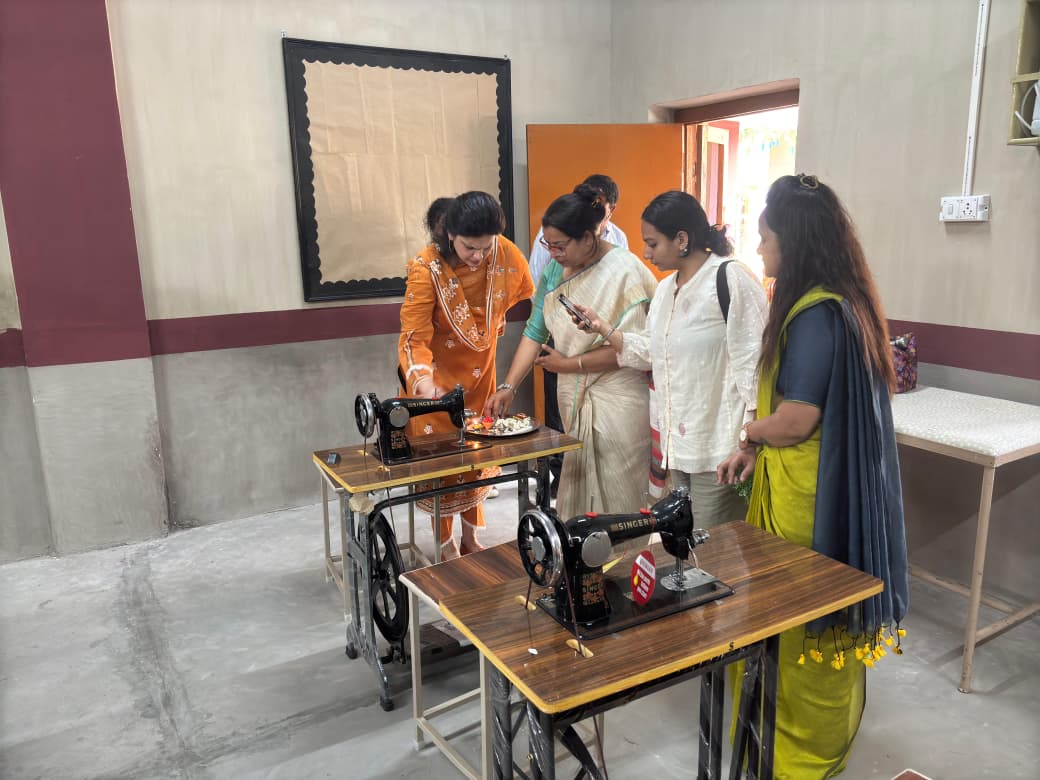
When people ask us what S-kala is trying to achieve, we could give them the polished answer.
We could talk about skill development outcomes. We could mention training completion rates and certificates issued. We could list the programmes we run and the number of women enrolled.
All of that is true. And none of it quite answers the question.
The real answer is harder to put into a report, but it is the one that actually matters.
We are trying to help a woman reach a point where she wakes up one morning and thinks: I know what I can do. I know that it has value. And I know that I have a real place in shaping what happens next in my life.
That is what we mean by livelihood readiness. Not a certificate. Not a completed course. A genuine shift in how a woman understands herself and her place in the world.
---
The Gap Nobody Talks About
There is a gap that exists in most skill training conversations, and it quietly does a lot of damage.
The gap is between "she learned the skill" and "she can build a livelihood from it."
Learning a skill and being ready to build a livelihood from it are two genuinely different things. You can learn to stitch in three weeks. Becoming someone who can produce consistent, quality, sellable work — and who believes in her own ability enough to actually go out and do it — takes longer and requires more.
It requires practice. Real, repeated, honest practice — not just going through the motions but actually pushing toward quality. It requires correction — the willingness to hear that something is not yet good enough and to try again with more care. It requires confidence — not the hollow kind that comes from praise given too freely, but the solid kind that comes from having done something well and knowing it.
And it requires a change in how a woman sees herself — a shift from "I am a person who attended training" to "I am a person with a skill that has real value."
At S-kala, the entire programme is designed around closing this gap. Not rushing through it. Closing it.
---
What Quality Actually Means Here
We talk a lot about quality at S-kala, and we want to be specific about what we mean — because it is easy to use the word without giving it real weight.
A stitched pouch that is finished neatly, with even seams and a clean edge, can be given as a gift, sold at a market, or presented to a CSR partner as evidence of the work we do. A stitched pouch that is rushed and uneven, however much effort went into it, cannot. The difference is not in the effort. It is in the finish.
We teach our learners this directly, because we believe they deserve to hear the honest version of what quality means and why it matters.
We also know that pushing for quality in a training room requires patience and trust — on both sides. A learner has to trust that when her trainer asks her to do it again, it is not a criticism of her ability. It is an investment in her future. A trainer has to trust that the learner is capable of better, even when the first attempt does not show it.
This mutual trust is what makes quality possible. And quality is what makes livelihood possible.
---
The Moment a Product Becomes More Than a Product
There is a specific thing that happens when a woman's work is displayed and someone else looks at it with genuine interest.
Not polite interest. Genuine interest — the kind that makes a person lean forward, pick something up, turn it over in their hands.
We have watched this happen in our product showcases. A woman stands near something she made, not quite willing to claim it yet, watching someone examine it. And when the person looks up and says "who made this?" — the woman's face changes.
Because it is one thing to be told your work is good. It is another thing entirely to have a stranger — someone with no reason to flatter you — choose your work out of a collection of things, hold it, and ask about the person behind it.
That moment does something nothing else quite manages to do. It transforms the product from a practice exercise into evidence. Evidence that she can make something other people value. Evidence that her skill is real and not just a thing that works within the safety of a training room. Evidence that what she has learned is genuinely marketable.
This is why product visibility is not an optional extra at S-kala. It is part of the process of becoming livelihood-ready. Because readiness is not only about what a woman can do. It is about whether she believes what she can do is worth something. And the most powerful argument for that belief is not words — it is someone else's genuine interest.
---
What We Are Not Promising
We want to be honest with you, because we think honesty is more respectful than a polished sales pitch.
We are not promising that every woman who completes training at S-kala will immediately start earning a regular income. The journey from training to livelihood is real, and it takes time.
We are not promising that the path will be easy or straight. There will be setbacks. There will be moments of doubt. There will be days when the confidence built in the training room feels harder to access in the outside world.
What we are promising is this.
A woman who trains at S-kala will leave with a skill she genuinely understands and can practice on her own. She will leave having made real things — not just practice attempts, but finished products she can be proud of. She will leave with a certificate that formally acknowledges her achievement. She will leave having been treated with dignity at every step.
And she will leave carrying something that no single piece of paper can fully capture — the experience of having started something difficult, stayed with it, and come out the other side knowing more about her own capability than she knew before she walked in.
That is the foundation. What she builds on it is hers.
---
The Belief That Makes Everything Else Possible
In our experience, the single most important factor in whether a woman moves from training into livelihood readiness is not the quality of the programme or the skill of the trainers, important as both of those are.
It is whether she genuinely believes that she can.
That belief is fragile at the beginning. It has often been worn down by years of discouragement, self-doubt, and the accumulated weight of being told — directly or indirectly — that opportunity is for someone else.
Building it back up takes time. It takes a training environment that treats effort with patience and achievement with genuine recognition. It takes trainers who teach with both skill and warmth. It takes the experience of completing something, holding it, and having the world respond to it as if it has value.
At S-kala, we take this responsibility seriously. We are not just running training sessions. We are building the foundation of a woman's belief in herself.
When that foundation is solid, everything becomes possible.
Ready to begin? S-kala is ready for you.
[Join the training programme →](/join)
---
---
We could talk about skill development outcomes. We could mention training completion rates and certificates issued. We could list the programmes we run and the number of women enrolled.
All of that is true. And none of it quite answers the question.
The real answer is harder to put into a report, but it is the one that actually matters.
We are trying to help a woman reach a point where she wakes up one morning and thinks: I know what I can do. I know that it has value. And I know that I have a real place in shaping what happens next in my life.
That is what we mean by livelihood readiness. Not a certificate. Not a completed course. A genuine shift in how a woman understands herself and her place in the world.
---
The Gap Nobody Talks About
There is a gap that exists in most skill training conversations, and it quietly does a lot of damage.
The gap is between "she learned the skill" and "she can build a livelihood from it."
Learning a skill and being ready to build a livelihood from it are two genuinely different things. You can learn to stitch in three weeks. Becoming someone who can produce consistent, quality, sellable work — and who believes in her own ability enough to actually go out and do it — takes longer and requires more.
It requires practice. Real, repeated, honest practice — not just going through the motions but actually pushing toward quality. It requires correction — the willingness to hear that something is not yet good enough and to try again with more care. It requires confidence — not the hollow kind that comes from praise given too freely, but the solid kind that comes from having done something well and knowing it.
And it requires a change in how a woman sees herself — a shift from "I am a person who attended training" to "I am a person with a skill that has real value."
At S-kala, the entire programme is designed around closing this gap. Not rushing through it. Closing it.
---
What Quality Actually Means Here
We talk a lot about quality at S-kala, and we want to be specific about what we mean — because it is easy to use the word without giving it real weight.
A stitched pouch that is finished neatly, with even seams and a clean edge, can be given as a gift, sold at a market, or presented to a CSR partner as evidence of the work we do. A stitched pouch that is rushed and uneven, however much effort went into it, cannot. The difference is not in the effort. It is in the finish.
We teach our learners this directly, because we believe they deserve to hear the honest version of what quality means and why it matters.
We also know that pushing for quality in a training room requires patience and trust — on both sides. A learner has to trust that when her trainer asks her to do it again, it is not a criticism of her ability. It is an investment in her future. A trainer has to trust that the learner is capable of better, even when the first attempt does not show it.
This mutual trust is what makes quality possible. And quality is what makes livelihood possible.
---
The Moment a Product Becomes More Than a Product
There is a specific thing that happens when a woman's work is displayed and someone else looks at it with genuine interest.
Not polite interest. Genuine interest — the kind that makes a person lean forward, pick something up, turn it over in their hands.
We have watched this happen in our product showcases. A woman stands near something she made, not quite willing to claim it yet, watching someone examine it. And when the person looks up and says "who made this?" — the woman's face changes.
Because it is one thing to be told your work is good. It is another thing entirely to have a stranger — someone with no reason to flatter you — choose your work out of a collection of things, hold it, and ask about the person behind it.
That moment does something nothing else quite manages to do. It transforms the product from a practice exercise into evidence. Evidence that she can make something other people value. Evidence that her skill is real and not just a thing that works within the safety of a training room. Evidence that what she has learned is genuinely marketable.
This is why product visibility is not an optional extra at S-kala. It is part of the process of becoming livelihood-ready. Because readiness is not only about what a woman can do. It is about whether she believes what she can do is worth something. And the most powerful argument for that belief is not words — it is someone else's genuine interest.
---
What We Are Not Promising
We want to be honest with you, because we think honesty is more respectful than a polished sales pitch.
We are not promising that every woman who completes training at S-kala will immediately start earning a regular income. The journey from training to livelihood is real, and it takes time.
We are not promising that the path will be easy or straight. There will be setbacks. There will be moments of doubt. There will be days when the confidence built in the training room feels harder to access in the outside world.
What we are promising is this.
A woman who trains at S-kala will leave with a skill she genuinely understands and can practice on her own. She will leave having made real things — not just practice attempts, but finished products she can be proud of. She will leave with a certificate that formally acknowledges her achievement. She will leave having been treated with dignity at every step.
And she will leave carrying something that no single piece of paper can fully capture — the experience of having started something difficult, stayed with it, and come out the other side knowing more about her own capability than she knew before she walked in.
That is the foundation. What she builds on it is hers.
---
The Belief That Makes Everything Else Possible
In our experience, the single most important factor in whether a woman moves from training into livelihood readiness is not the quality of the programme or the skill of the trainers, important as both of those are.
It is whether she genuinely believes that she can.
That belief is fragile at the beginning. It has often been worn down by years of discouragement, self-doubt, and the accumulated weight of being told — directly or indirectly — that opportunity is for someone else.
Building it back up takes time. It takes a training environment that treats effort with patience and achievement with genuine recognition. It takes trainers who teach with both skill and warmth. It takes the experience of completing something, holding it, and having the world respond to it as if it has value.
At S-kala, we take this responsibility seriously. We are not just running training sessions. We are building the foundation of a woman's belief in herself.
When that foundation is solid, everything becomes possible.
Ready to begin? S-kala is ready for you.
[Join the training programme →](/join)
---
---