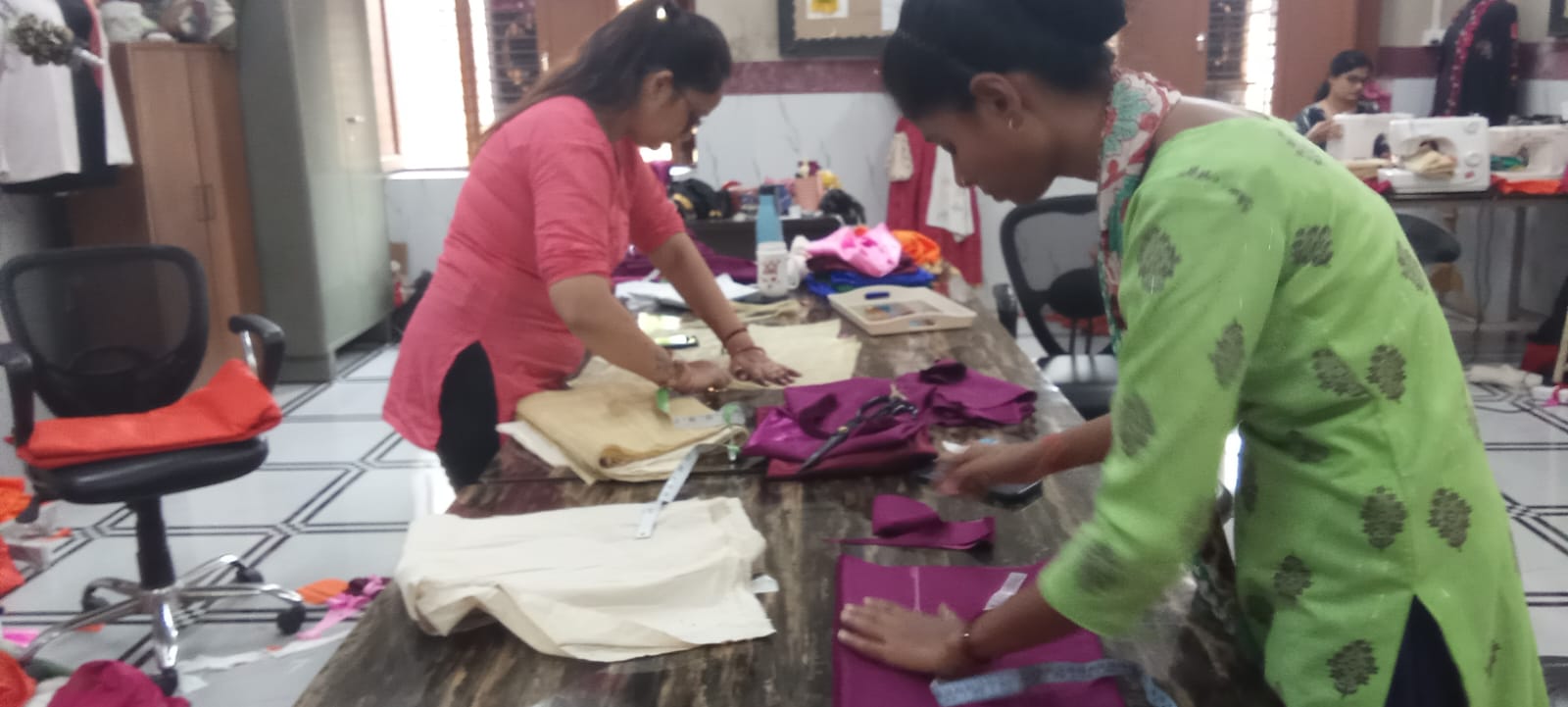
Last month, a woman completed her training at S-kala and received her certificate.
It was a simple ceremony — no stage, no crowd, no formal speeches. Her trainer handed her the certificate, said a few warm words, and the other women in the room clapped. It took about four minutes.
But when she walked out of the building holding that piece of paper, something about the way she held it caught our attention. She held it with both hands. Carefully. The way you hold something you are not yet entirely sure is real.
We wrote it down. We photographed the moment. We recorded her programme, her completion date, her achievement.
Because in three years, or five years, or ten years — when S-kala is larger and its impact is broader — that woman's certificate will be part of the honest evidence of where all of this began. Her journey will be part of the story of an institution that started small, stayed true to its purpose, and built something real in the community it set out to serve.
That is why we document everything. Not for compliance. Not because someone told us to. Because the women who come through our doors deserve to have their journeys preserved. And because the work we are doing deserves to be seen for exactly what it is.
---
The Problem With Invisible Work
There is a particular kind of loss that happens when good work goes unrecorded.
It is not visible loss. Nobody announces it. Nothing breaks. The training still happens. The products are still made. The women still grow.
But without documentation, the growth stays trapped inside the room where it happened. It cannot be shared with a CSR partner who might fund the next training batch. It cannot be shown to a donor who is deciding whether to support the programme. It cannot be used to argue, when it matters, that this institution is doing exactly what it claims to be doing.
And perhaps most importantly — it cannot be shown back to the women themselves, as the accumulated, irrefutable evidence that something real has happened here.
We have seen institutions do genuinely meaningful work and struggle to receive the support their work deserves, simply because they could not show it. The work was real. The impact was real. But without records, without photographs, without reports that told the story clearly and honestly — it remained invisible.
S-kala is determined not to make that mistake.
---
What a Training Record Actually Contains
When we say we document our training, we do not mean a spreadsheet with names and dates, though names and dates are part of it.
We mean the whole picture.
We mean the learner who enrolled with very little confidence and completed the programme with considerably more of it. We mean the product she made in her final week that was noticeably better than the product she made in her first week. We mean the question she asked in the third session that showed she had started to think beyond the instructions — that she was starting to understand the work, not just repeat it.
We mean the trainer who adjusted her teaching approach halfway through the batch because she noticed that three of the learners were struggling with the same step, and who adapted without being asked to. We mean the session where something clicked for a whole group of women at once, and the energy in the room shifted from effort to ease.
These details matter. They are the difference between impact documentation that is honest and alive, and impact documentation that is technically accurate but tells the reader nothing they did not already expect.
At S-kala, we try to capture both. The numbers and the humanity. The data and the story. Because CSR partners and institutional reviewers are not just looking for figures — they are looking for confidence that a real institution is doing real work with real care. And the best way to give them that confidence is to show them, clearly and honestly, exactly what is happening here.
---
What Transparency Builds
We live in a time when institutions are rightly held to higher standards of transparency than ever before. Donors ask harder questions. CSR partners look more carefully before committing resources. Communities expect the institutions that claim to serve them to actually demonstrate that they are.
This is good. This is how it should be.
S-kala welcomes this scrutiny. Not reluctantly — genuinely. Because an institution that is doing what it says it is doing has nothing to fear from transparency and everything to gain from it.
When we publish our CSR reports, when we share our training records, when we make our certificate verification accessible, when we put photographs of real training sessions and real products on our website — we are not performing accountability. We are practicing it.
And this practice builds something that no marketing campaign ever could. It builds trust. Real, earned, sustainable trust — the kind that keeps partners engaged for years, not just seasons.
---
Every Record Is a Person
Here is the thing we never want to lose sight of, no matter how organised and systematic the documentation process becomes.
Every record in our database is a person.
The number 3 in our "Certificates Issued" counter is three women who showed up for every training session, practiced when practice was hard, improved when improvement felt slow, and finished something they were proud enough to have formally recognised.
The photograph in our gallery labelled "Embroidery and Zardozi Session" is a roomful of women who spent two hours in focused, patient, productive work — learning a craft that their grandmothers knew, discovering that their own hands were capable of the same quiet precision.
The success story on our website is a real journey. A real woman. A real change in the way she sees herself and what she believes is possible for her future.
We keep these reminders close. Because it is easy, in the day-to-day work of running an institution, to start thinking of documentation as a task to be completed rather than an act of respect to be practised.
It is always an act of respect. For the women whose journeys we are recording. For the trainers whose work we are preserving. For the community that trusts us to be honest about what we are doing in its midst.
---
What We Are Building Toward
S-kala is young. Our numbers are honest and modest — we are not yet the large-scale institution we intend to become. But every number we have is real. Every certificate is genuine. Every product photograph shows something actually made by the hands of a woman who trained here.
That honesty, from the very beginning, is the foundation on which everything else will be built.
In five years, when our training batches are larger and our impact counters carry bigger numbers, we want those numbers to be looked back on as the honest start of something that grew with integrity. We want the organisations that partner with us now to be the same organisations that point to us later as an example of what transparent, community-rooted, women-centred institutional development actually looks like.
We want the women who trained in our first batch to be able to show their children, one day, a photograph from a session at S-kala and say: I was there when this started. I was part of this.
That is what we are building toward. And documentation is how we make sure the building is visible — not just to us, but to everyone it should matter to.
Every record we keep is a brick in that building.
And we intend to keep building, carefully and honestly, for a very long time.
Interested in supporting S-kala's journey? We would be glad to connect.
[Get in touch →](/contact)
It was a simple ceremony — no stage, no crowd, no formal speeches. Her trainer handed her the certificate, said a few warm words, and the other women in the room clapped. It took about four minutes.
But when she walked out of the building holding that piece of paper, something about the way she held it caught our attention. She held it with both hands. Carefully. The way you hold something you are not yet entirely sure is real.
We wrote it down. We photographed the moment. We recorded her programme, her completion date, her achievement.
Because in three years, or five years, or ten years — when S-kala is larger and its impact is broader — that woman's certificate will be part of the honest evidence of where all of this began. Her journey will be part of the story of an institution that started small, stayed true to its purpose, and built something real in the community it set out to serve.
That is why we document everything. Not for compliance. Not because someone told us to. Because the women who come through our doors deserve to have their journeys preserved. And because the work we are doing deserves to be seen for exactly what it is.
---
The Problem With Invisible Work
There is a particular kind of loss that happens when good work goes unrecorded.
It is not visible loss. Nobody announces it. Nothing breaks. The training still happens. The products are still made. The women still grow.
But without documentation, the growth stays trapped inside the room where it happened. It cannot be shared with a CSR partner who might fund the next training batch. It cannot be shown to a donor who is deciding whether to support the programme. It cannot be used to argue, when it matters, that this institution is doing exactly what it claims to be doing.
And perhaps most importantly — it cannot be shown back to the women themselves, as the accumulated, irrefutable evidence that something real has happened here.
We have seen institutions do genuinely meaningful work and struggle to receive the support their work deserves, simply because they could not show it. The work was real. The impact was real. But without records, without photographs, without reports that told the story clearly and honestly — it remained invisible.
S-kala is determined not to make that mistake.
---
What a Training Record Actually Contains
When we say we document our training, we do not mean a spreadsheet with names and dates, though names and dates are part of it.
We mean the whole picture.
We mean the learner who enrolled with very little confidence and completed the programme with considerably more of it. We mean the product she made in her final week that was noticeably better than the product she made in her first week. We mean the question she asked in the third session that showed she had started to think beyond the instructions — that she was starting to understand the work, not just repeat it.
We mean the trainer who adjusted her teaching approach halfway through the batch because she noticed that three of the learners were struggling with the same step, and who adapted without being asked to. We mean the session where something clicked for a whole group of women at once, and the energy in the room shifted from effort to ease.
These details matter. They are the difference between impact documentation that is honest and alive, and impact documentation that is technically accurate but tells the reader nothing they did not already expect.
At S-kala, we try to capture both. The numbers and the humanity. The data and the story. Because CSR partners and institutional reviewers are not just looking for figures — they are looking for confidence that a real institution is doing real work with real care. And the best way to give them that confidence is to show them, clearly and honestly, exactly what is happening here.
---
What Transparency Builds
We live in a time when institutions are rightly held to higher standards of transparency than ever before. Donors ask harder questions. CSR partners look more carefully before committing resources. Communities expect the institutions that claim to serve them to actually demonstrate that they are.
This is good. This is how it should be.
S-kala welcomes this scrutiny. Not reluctantly — genuinely. Because an institution that is doing what it says it is doing has nothing to fear from transparency and everything to gain from it.
When we publish our CSR reports, when we share our training records, when we make our certificate verification accessible, when we put photographs of real training sessions and real products on our website — we are not performing accountability. We are practicing it.
And this practice builds something that no marketing campaign ever could. It builds trust. Real, earned, sustainable trust — the kind that keeps partners engaged for years, not just seasons.
---
Every Record Is a Person
Here is the thing we never want to lose sight of, no matter how organised and systematic the documentation process becomes.
Every record in our database is a person.
The number 3 in our "Certificates Issued" counter is three women who showed up for every training session, practiced when practice was hard, improved when improvement felt slow, and finished something they were proud enough to have formally recognised.
The photograph in our gallery labelled "Embroidery and Zardozi Session" is a roomful of women who spent two hours in focused, patient, productive work — learning a craft that their grandmothers knew, discovering that their own hands were capable of the same quiet precision.
The success story on our website is a real journey. A real woman. A real change in the way she sees herself and what she believes is possible for her future.
We keep these reminders close. Because it is easy, in the day-to-day work of running an institution, to start thinking of documentation as a task to be completed rather than an act of respect to be practised.
It is always an act of respect. For the women whose journeys we are recording. For the trainers whose work we are preserving. For the community that trusts us to be honest about what we are doing in its midst.
---
What We Are Building Toward
S-kala is young. Our numbers are honest and modest — we are not yet the large-scale institution we intend to become. But every number we have is real. Every certificate is genuine. Every product photograph shows something actually made by the hands of a woman who trained here.
That honesty, from the very beginning, is the foundation on which everything else will be built.
In five years, when our training batches are larger and our impact counters carry bigger numbers, we want those numbers to be looked back on as the honest start of something that grew with integrity. We want the organisations that partner with us now to be the same organisations that point to us later as an example of what transparent, community-rooted, women-centred institutional development actually looks like.
We want the women who trained in our first batch to be able to show their children, one day, a photograph from a session at S-kala and say: I was there when this started. I was part of this.
That is what we are building toward. And documentation is how we make sure the building is visible — not just to us, but to everyone it should matter to.
Every record we keep is a brick in that building.
And we intend to keep building, carefully and honestly, for a very long time.
Interested in supporting S-kala's journey? We would be glad to connect.
[Get in touch →](/contact)